The Modern French Manicure: Micro French, Colored Tips, and Everything In Between
The French manicure came back, and it looks nothing like 2004. A guide to micro French, colored tips, reverse French, and which one suits your nails.
Published:
By Kim at Polished by Kim
The French manicure never really left. It just went into hiding for about a decade while everyone associated it with thick white tips and square nails from 2004. It is back now, and the version being requested in my studio looks almost nothing like the one you are picturing.
I get asked about this more than any other design. Looking back through my own portfolio to write this, French tips turned out to be more than a third of everything I have photographed. So here is the full breakdown: what each variation is, how it is actually done, and which one I would steer you toward.
What Changed
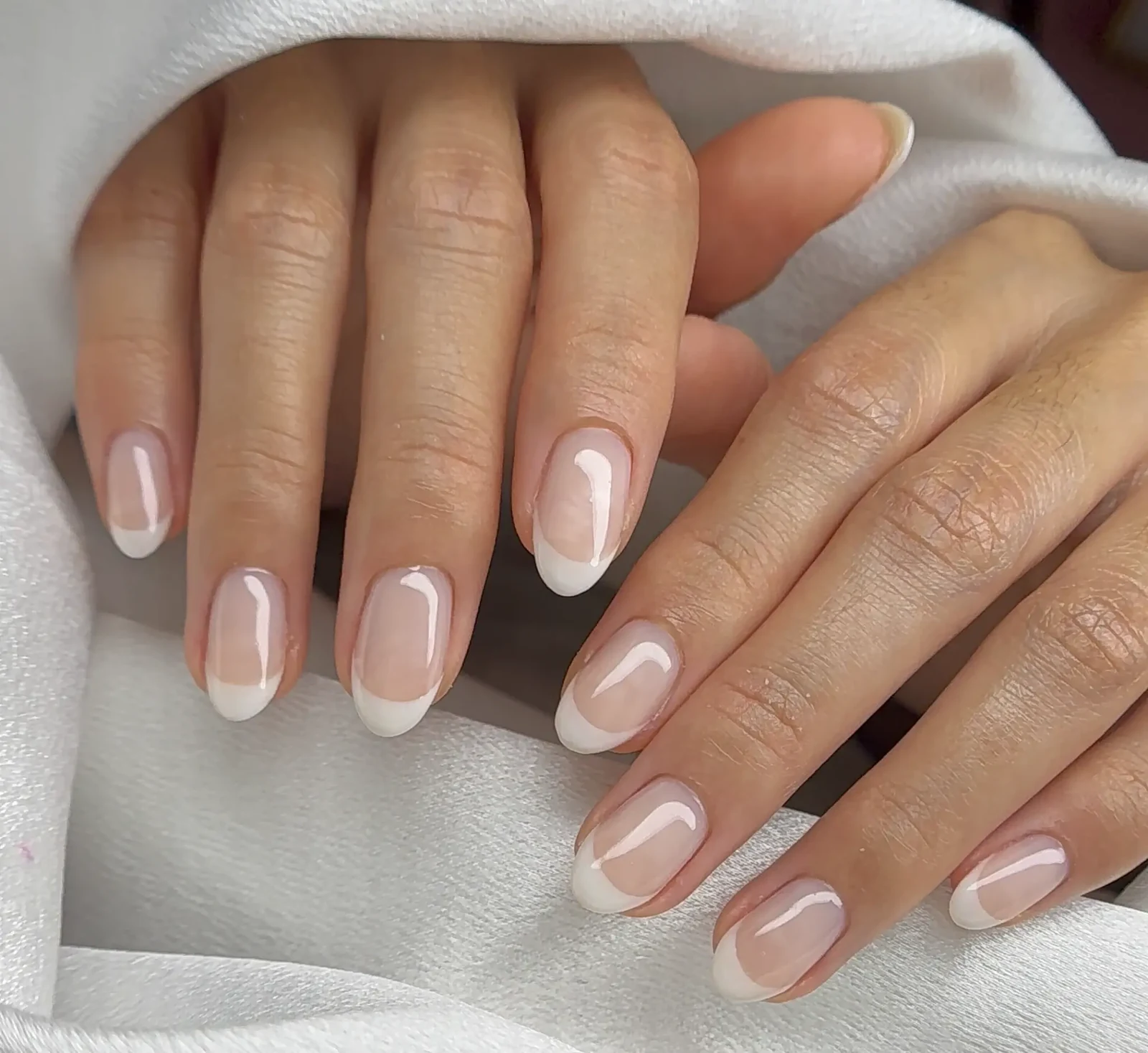
Three things, really.
The line got thinner. The old French had a tip band you could measure with a ruler. The modern one is often under two millimeters, sometimes closer to one. That single change is what makes it look expensive instead of dated.
The white went away. Cream, milk, beige, chrome, black, cherry, chocolate. White is now one option among many, and honestly not the most popular one.
The shape softened. Almond and squoval instead of hard square. The curve of the tip line follows the curve of the free edge, which is a small detail that makes an enormous difference.
Micro French
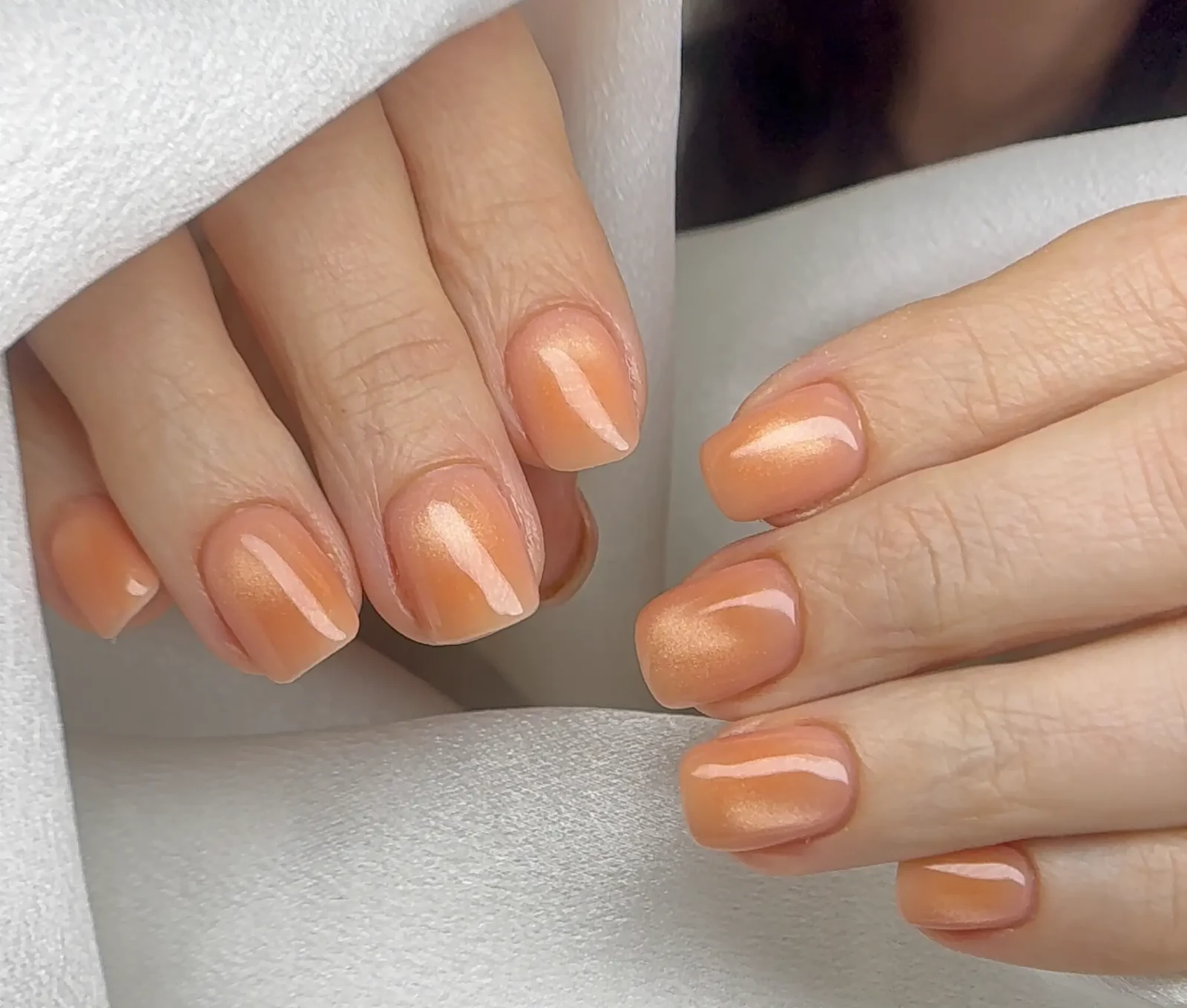
The thinnest possible line at the free edge. This is the one I recommend most often, and it is the hardest to do well.
A micro line has nowhere to hide. If the nail is not prepped perfectly, if the cuticle work is uneven, if the free edge is not symmetrical, the line will show it. This is exactly why micro French sits so beautifully on a Russian Manicure base. The clean, precise edge the technique produces is what gives the line something true to follow.
It does not have to be cream, either.
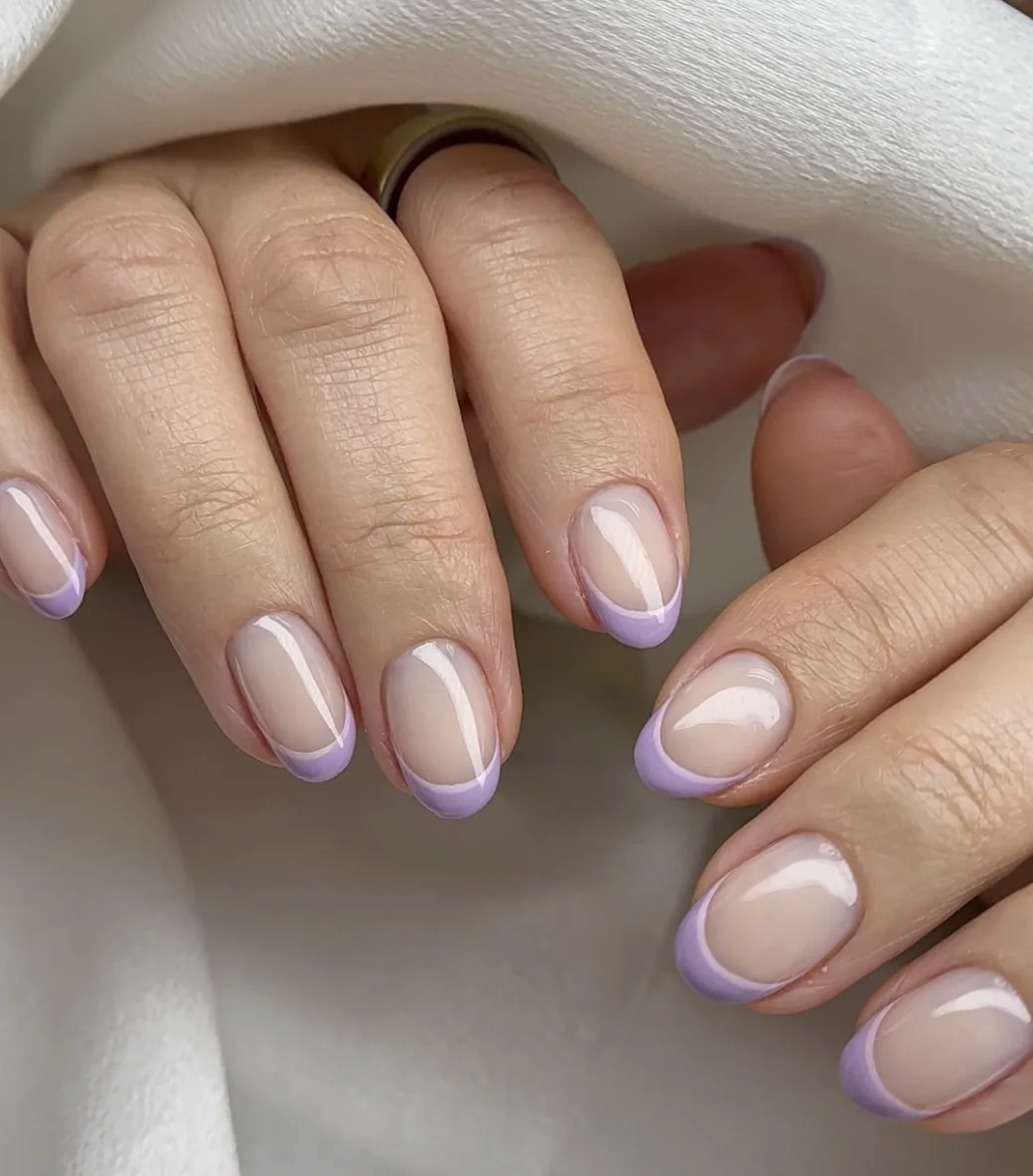
Best on: short to medium almond, round, or squoval. Works on natural nails.
Colored French
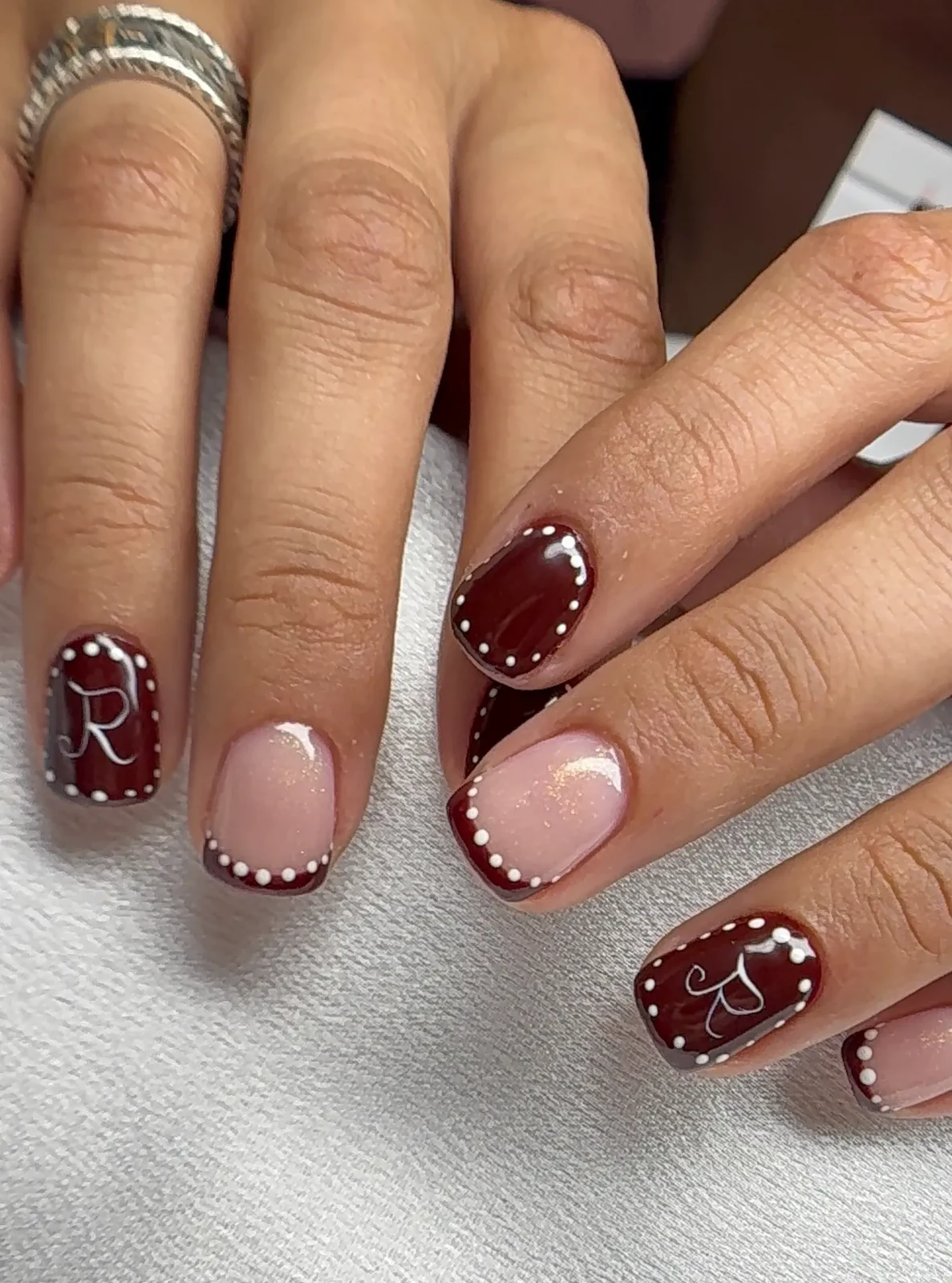
Same structure, any color you like at the tip. Burgundy on blush for fall. Black on milky white for something graphic. Red on a natural base, which is the one I do most often in the run up to the holidays.
This is the most versatile variation because the base and tip can be adjusted independently. Want it subtle? Keep both in the same family. Want it loud? Maximum contrast. The dots in the set above are the kind of detail that works precisely because brown and burgundy are neutrals underneath, so the art never fights the base.
Best on: any length, any shape. The most forgiving version.
Double French
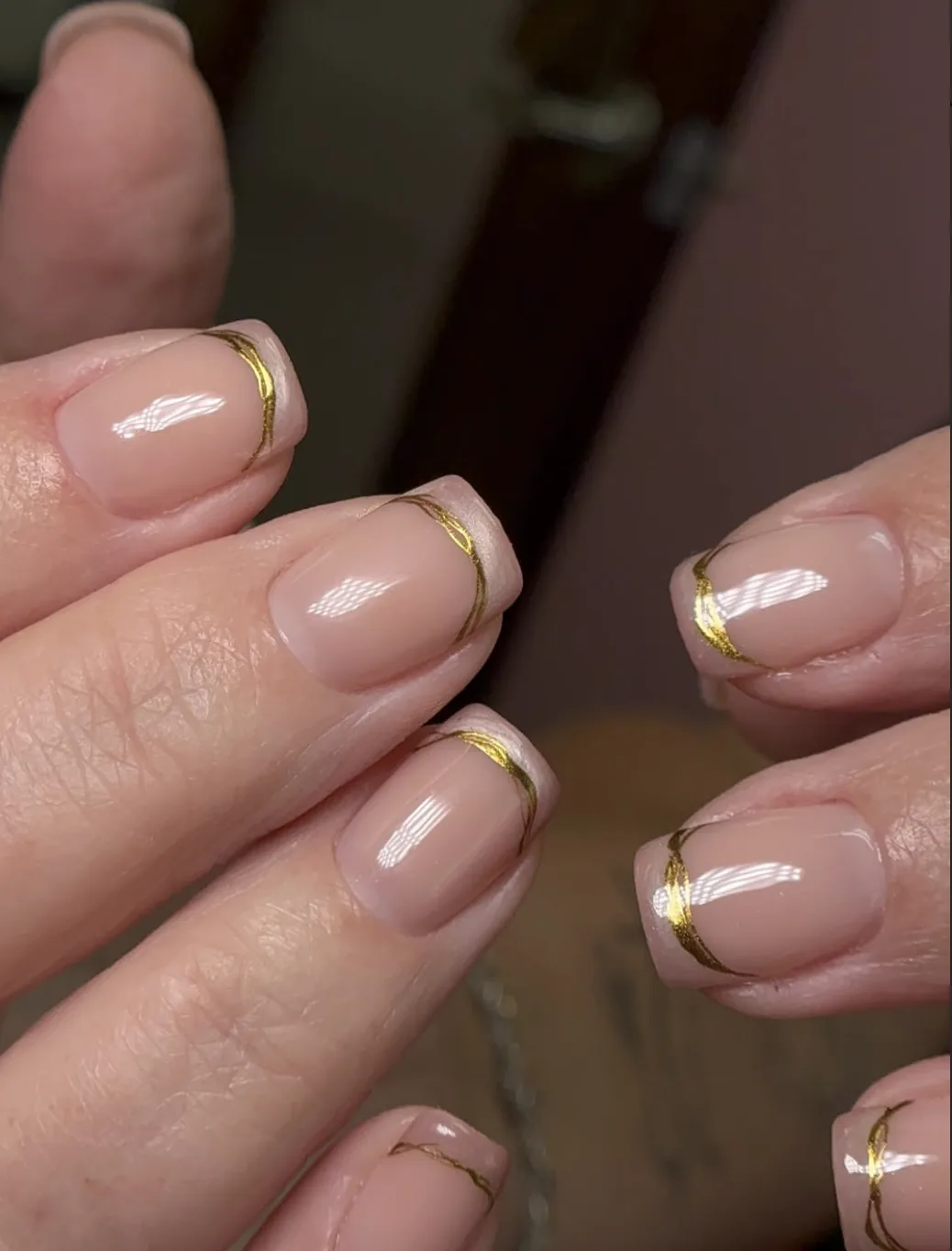
Two lines instead of one. Usually a thin metallic line sitting just below a second line or a color band. Gold is the metal I reach for most, because it warms the nail bed instead of cooling it the way silver does.
This is a precision job. The two lines have to be parallel across a curved surface, and any wobble is immediately visible because there is a second line right there for comparison.
Best on: medium to long. There needs to be room for both lines to breathe.
Diagonal and Angled French
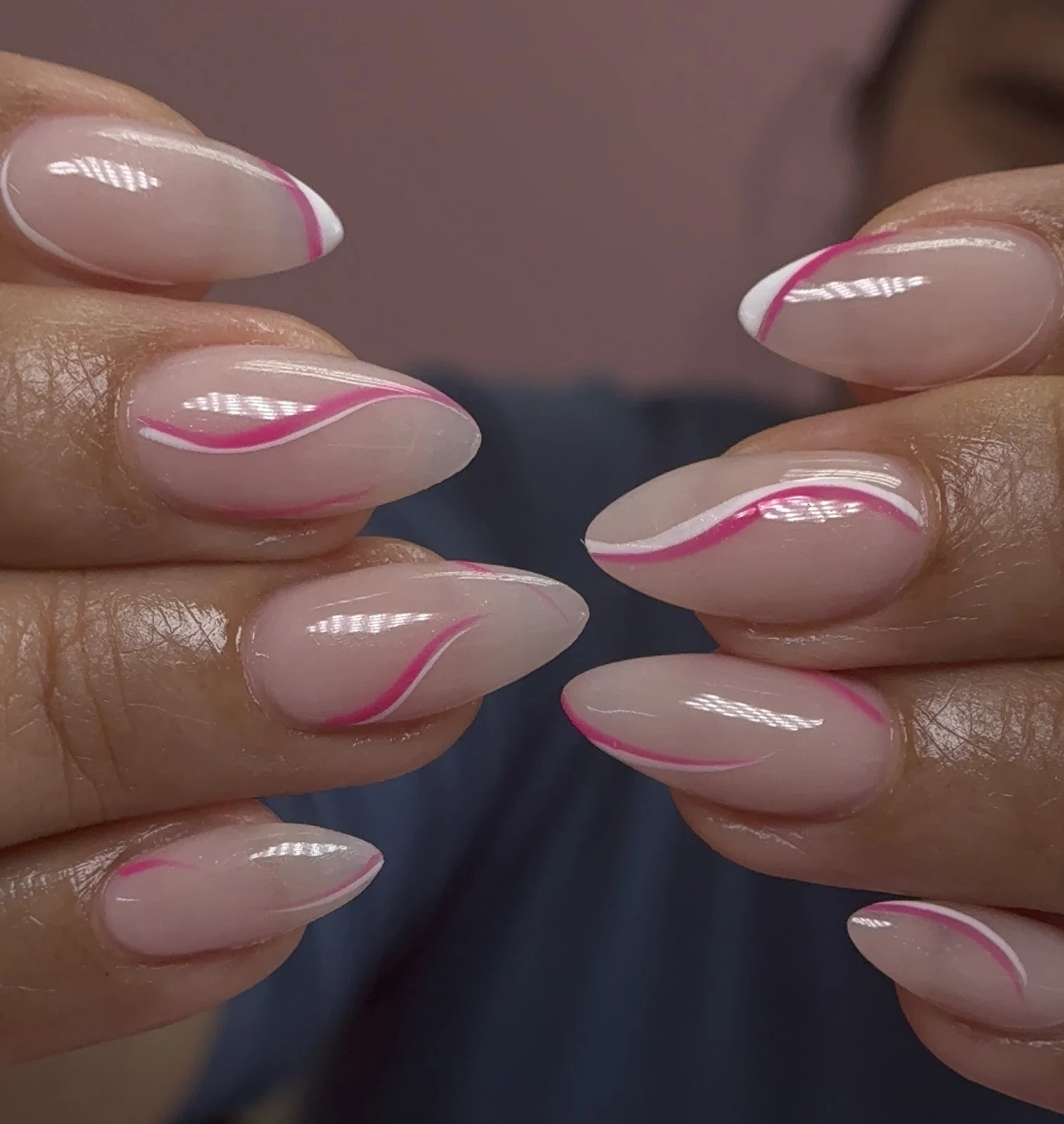
The tip line runs at an angle rather than following the free edge. It is the most modern feeling version and the one that photographs most like editorial nail art.
The set above is where this ends up if you keep going: the line leaves the tip entirely and becomes a swirl running the length of the nail. Structurally it is still a French, one accent line on a bare base, which is why it reads as elegant rather than busy.
Best on: longer almond or stiletto. On short nails the angle has nowhere to travel.
Chrome and Pearl French
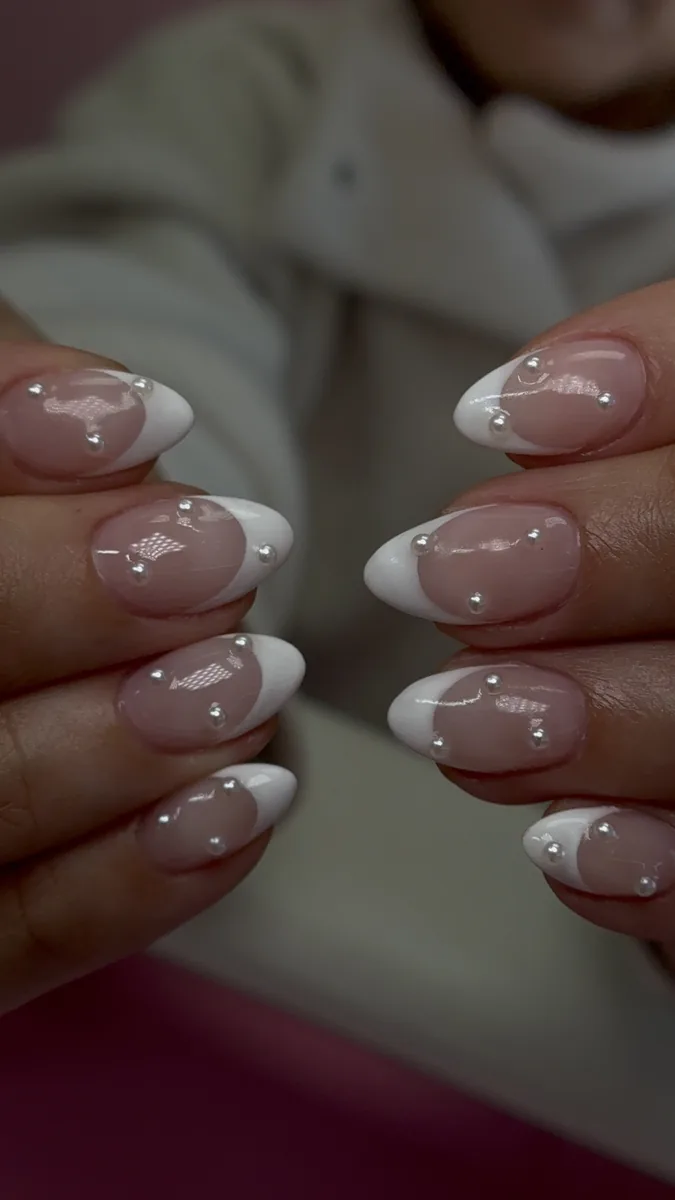
A chrome or pearl finish applied only to the tip. It catches light in a narrow band, which is subtle in person and striking in photos.
This is the low risk way to wear chrome if a full chrome set feels like too much, and it is the version I would put on a bride.
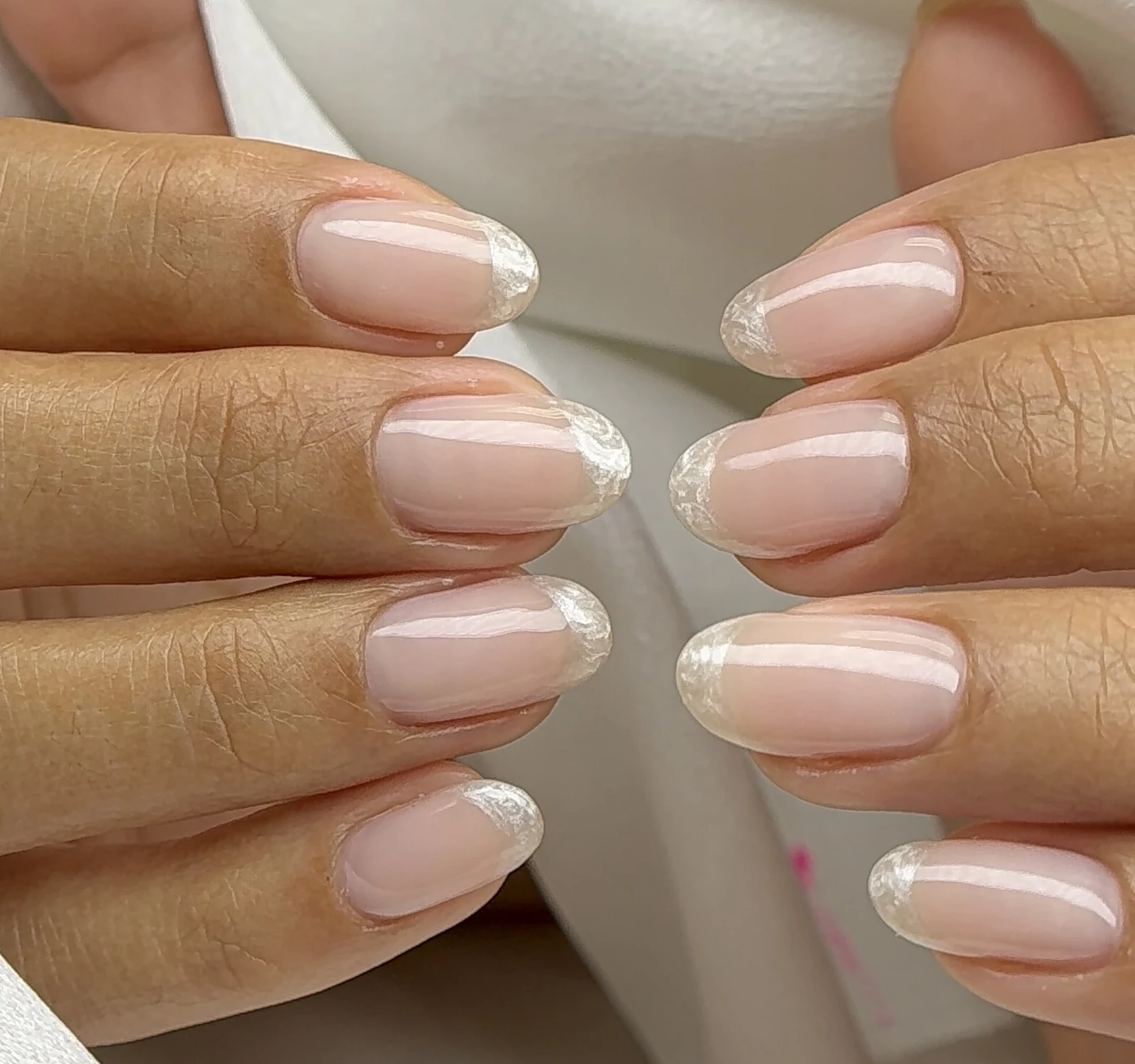
Best on: anything.
Reverse French
The color goes at the cuticle instead of the tip. A crescent of color at the base of the nail with the rest left bare or nude.
It is unexpected, and it does something flattering: because the eye lands at the base of the nail, the free edge appears longer. If you have short nail beds, this is a genuinely useful trick.
Best on: medium length, almond. Needs a very clean cuticle line, so again, Russian Manicure prep matters here.
Taking It Into Fall
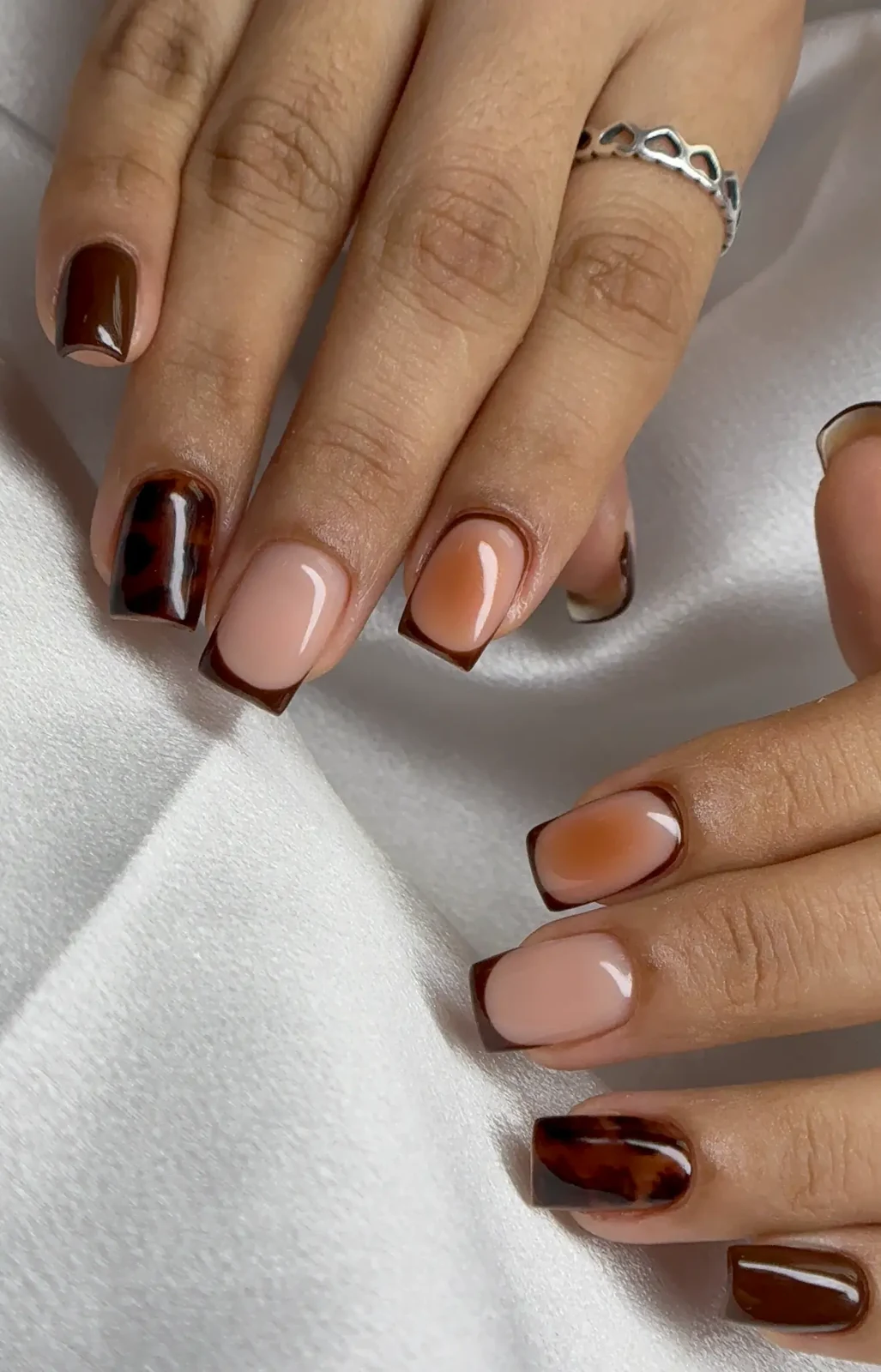
The reason I keep coming back to the French is that it takes a season without needing to be redesigned. Swap the cream for chocolate or burgundy, add a stripe or a stud, and the same structure reads completely differently.
Which One Should You Get?
If you are unsure, I would ask two questions.
How long are your nails, and how long do you want them? Micro French and reverse French flatter shorter nails. Diagonal and double French need length. If you are still deciding, my guide on choosing your nail length walks through it properly.
How visible do you want it to be? Cream micro French on a nude base is nearly invisible from across a room, which is exactly why people who work in conservative settings love it. A black diagonal French is a statement and will be the first thing anyone notices.
A Note on Longevity
French sets show regrowth differently than solid colors. The tip line stays exactly where it was placed while the nail grows out underneath it, so after three weeks the line sits slightly further from the free edge than it did on day one. Most people do not notice at two weeks. At four weeks it is visible.
If you want the longest possible wear between appointments, a colored French in a tone close to your base will disguise regrowth better than high contrast will. My post on making your manicure last covers the rest.
For structure and strength underneath any of these, Builder Gel or Gel-X both work. The choice depends on your natural nail, which is a conversation I would rather have in person than guess at here.
Curious which French suits your nails? Book your appointment at Polished by Kim and we will figure it out together.