Mix-and-Match Nails: How to Combine Patterns Without Overdoing It
Learn how to combine nail art patterns with repeated colors, varied motif sizes, quieter nails, and French tips, using real examples from Polished by Kim.
Published:
By Kim Le at Polished by Kim
Four ways to make the mix feel connected
Start with the part you love, then use one of these ideas to bring the other details together.
You can love the bow in one photo, the dots in another, and a different color combination without wanting three separate manicures. How do those details come together?
When I plan mixed artwork, I look at the whole hand. Repeated colors connect the designs; changes in scale and placement keep them interesting. These examples from my nail inspiration gallery show how that balance works. Explore my nail art options as you narrow down your ideas.
Repeat colors, even when they contrast
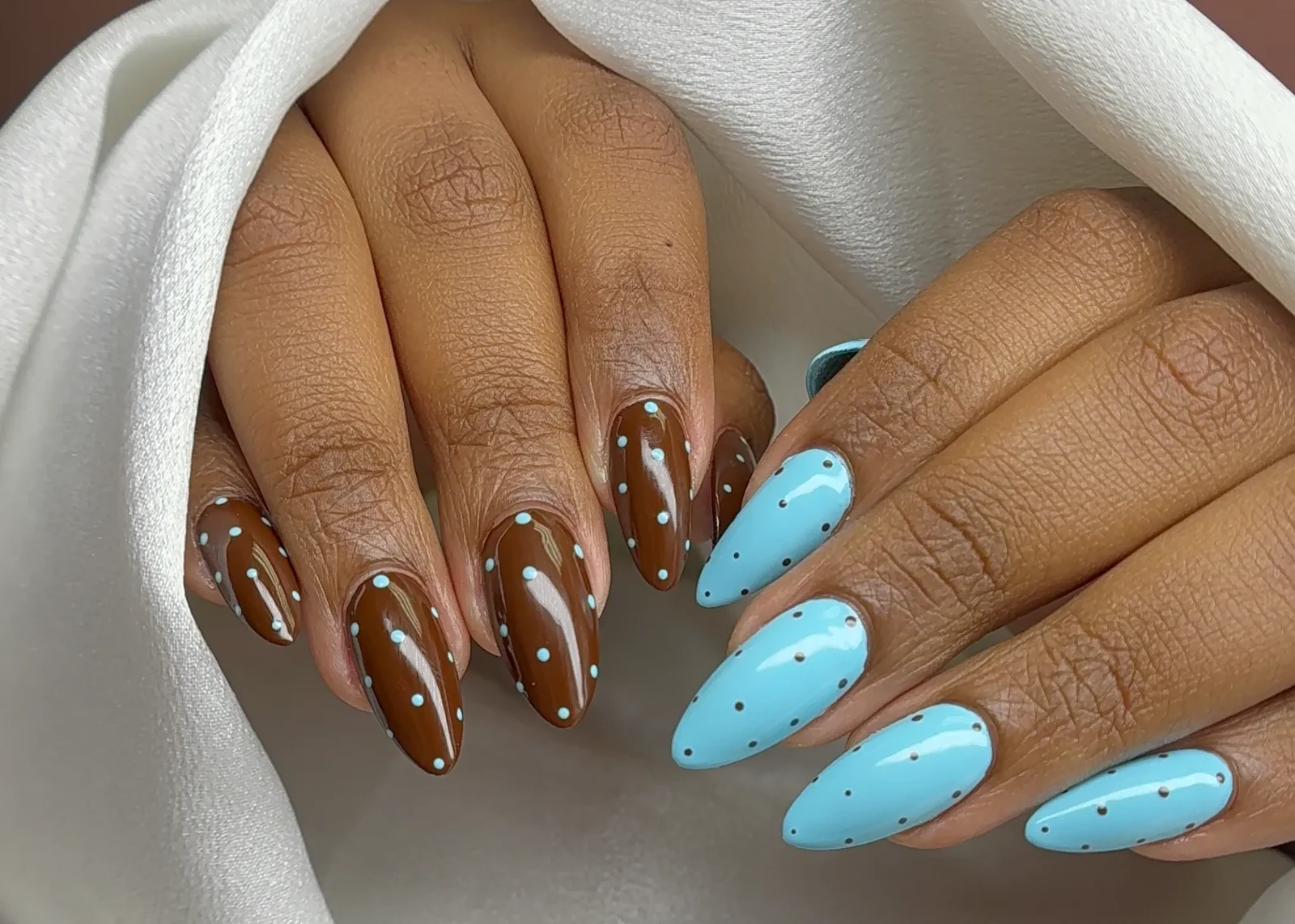
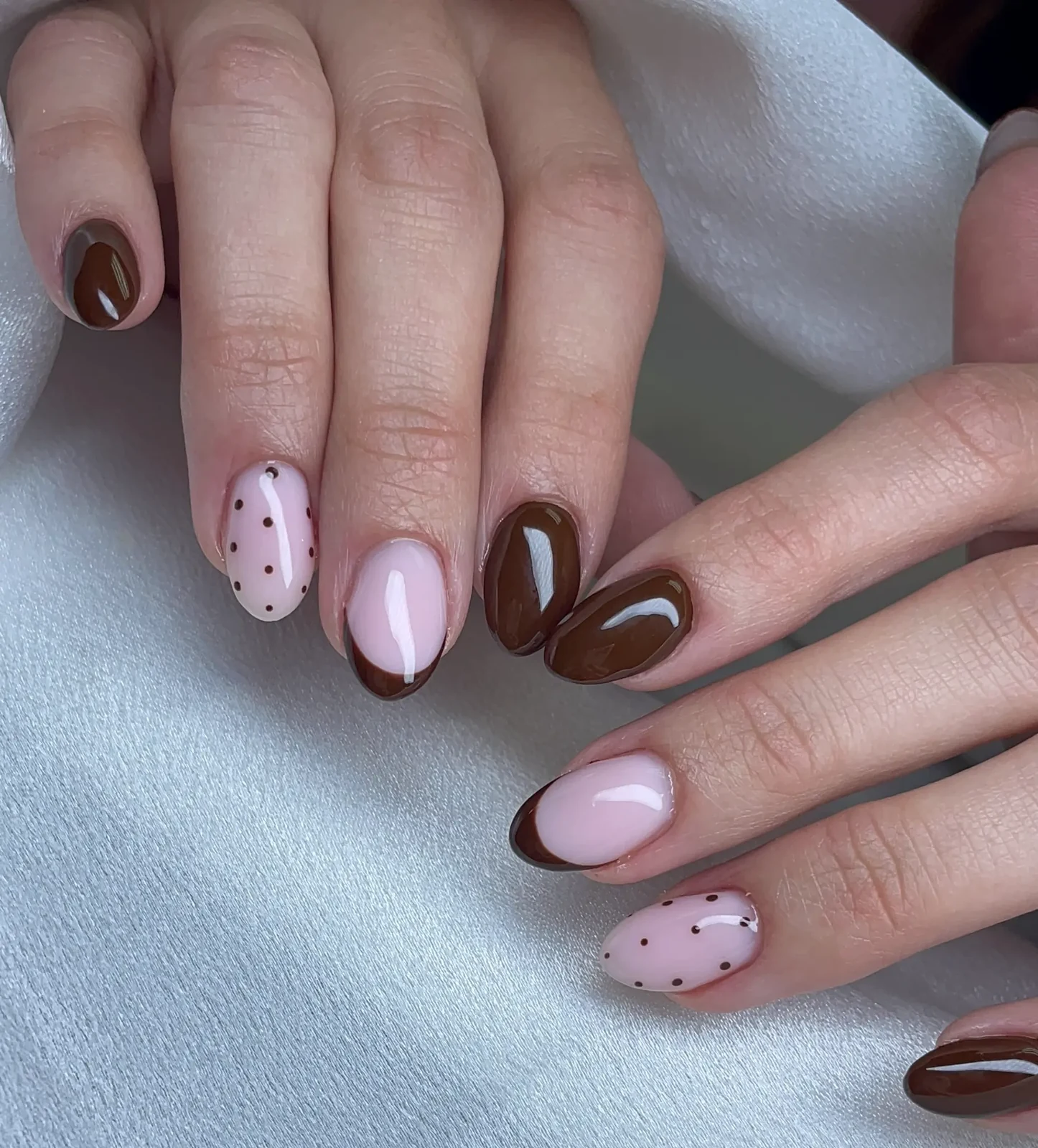
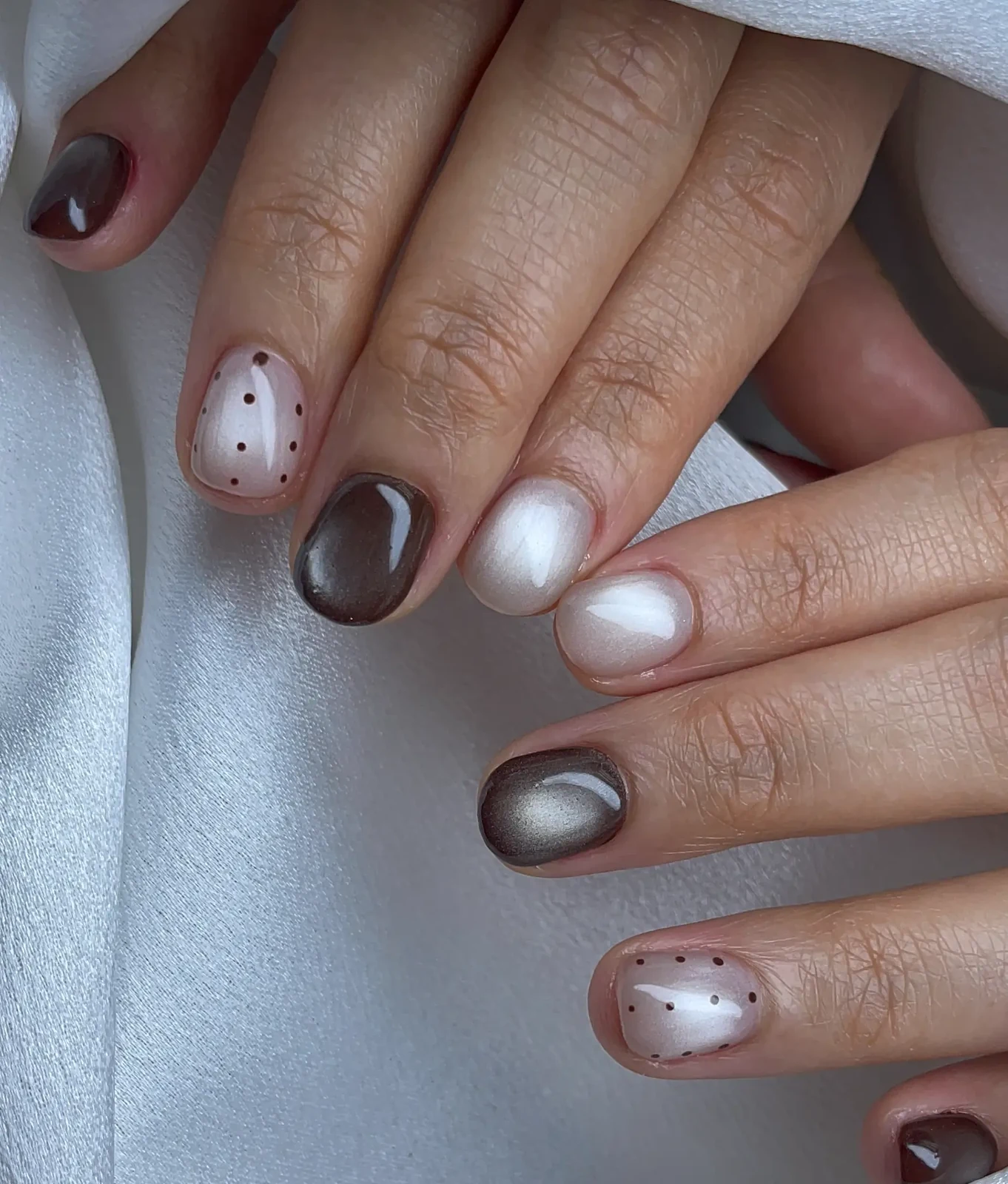
Start with a small palette you want to see across the whole set. The colors don't need to be similar. Chocolate brown and powder blue work here because both appear as background colors and little details. That back-and-forth makes the contrast feel deliberate.
If you're combining references with different palettes, I would first choose which colors to carry through. A bow, flower, or plaid can change color without losing the detail that caught your eye.
Give patterns different amounts of space
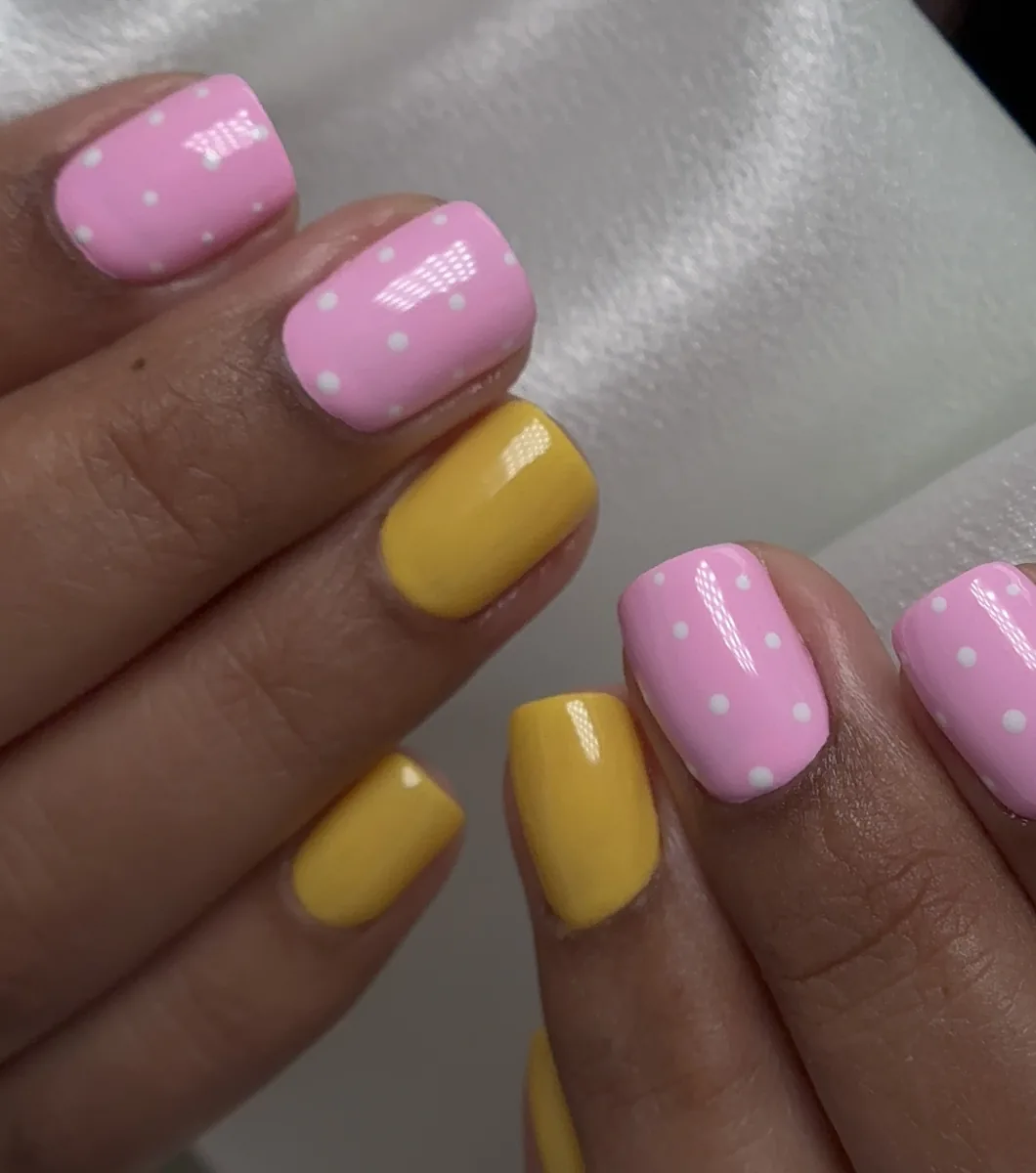
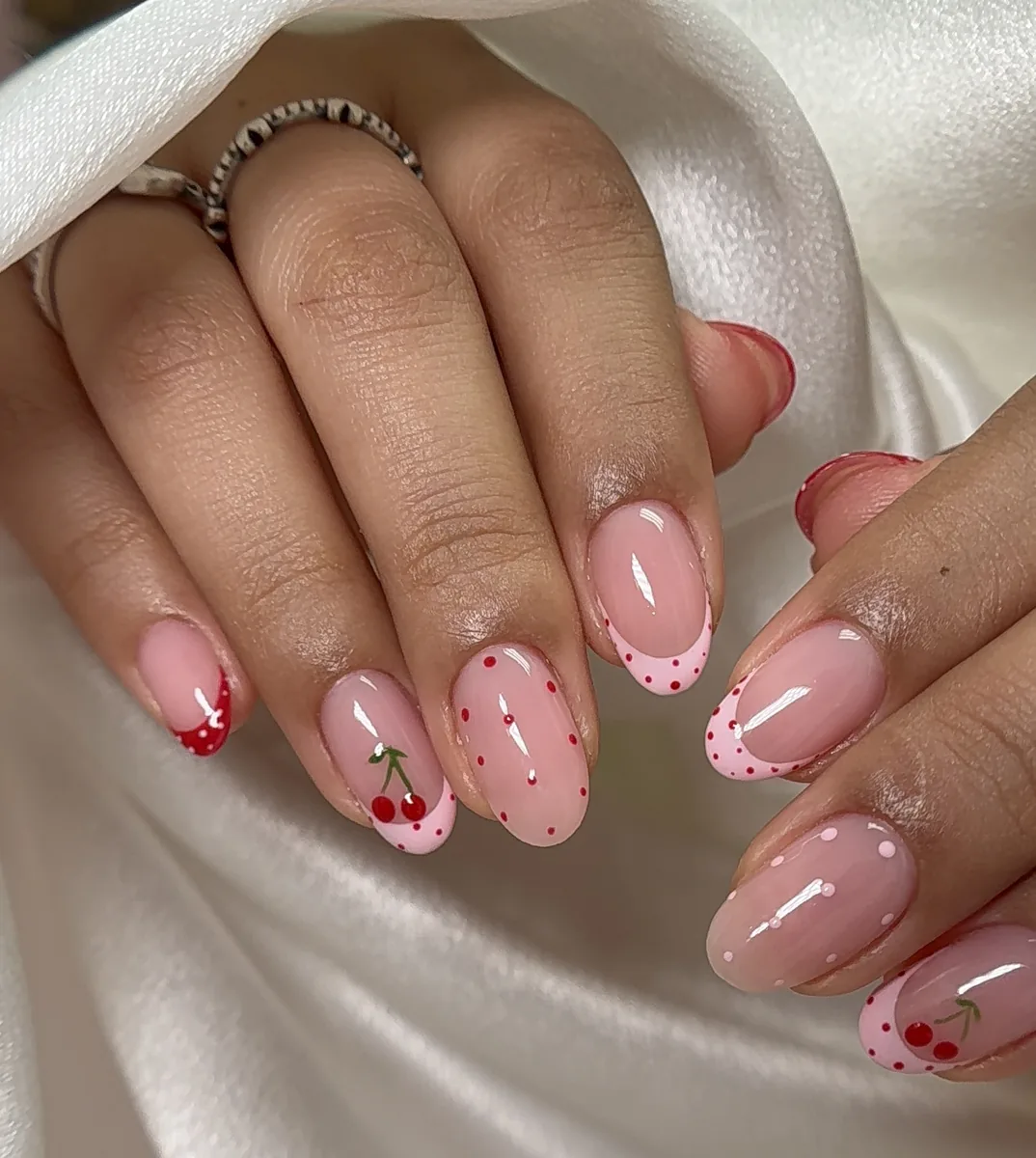
A larger flower or starburst catches your eye differently from tiny dots. Together, you get a main detail with a smaller supporting pattern, rather than two designs competing at the same size.
I also look at spacing. Tightly repeated small motifs can feel busier than one larger flower with base showing around it. If a combination feels crowded, try smaller dots or more space between them.
Let a few nails be quieter
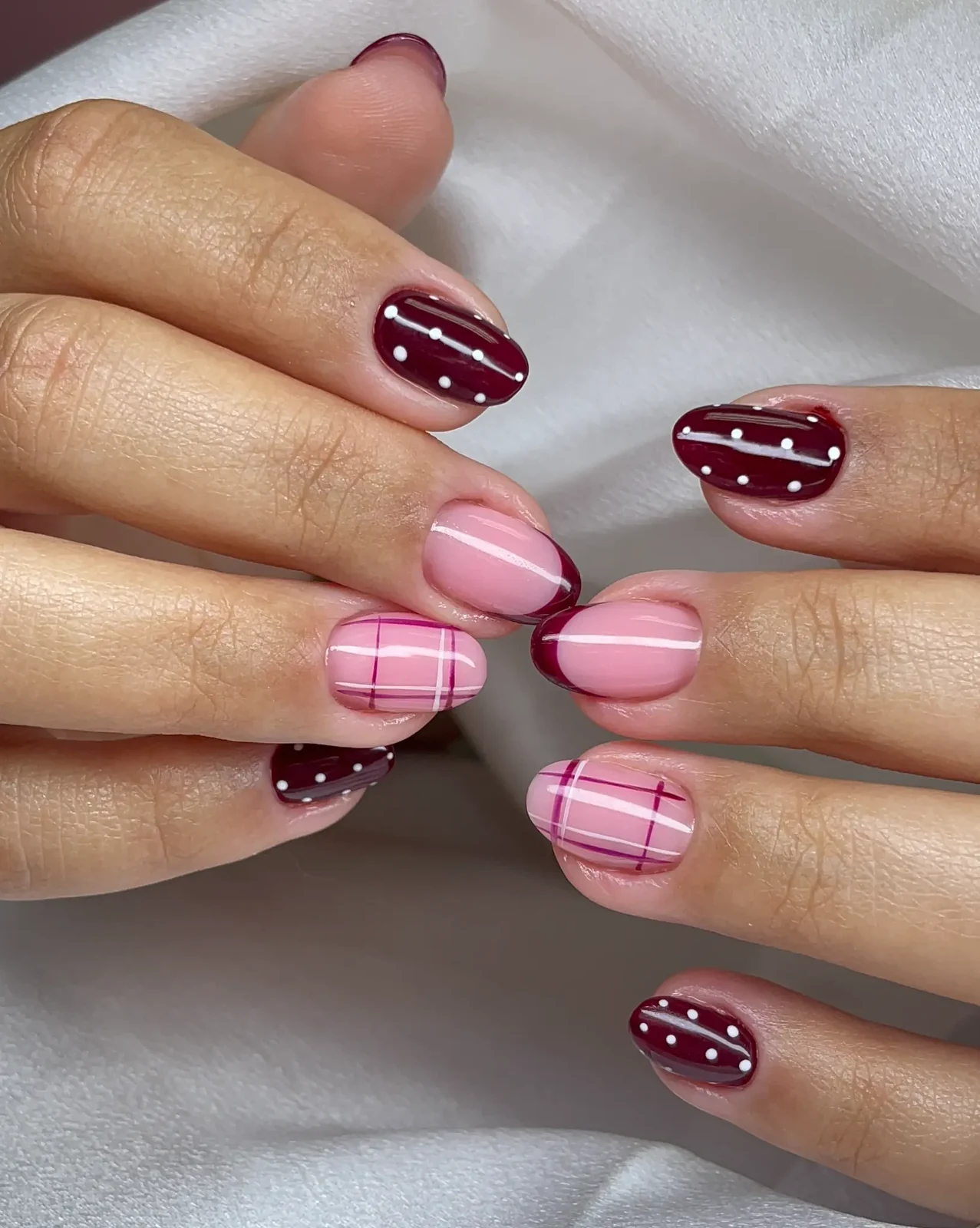
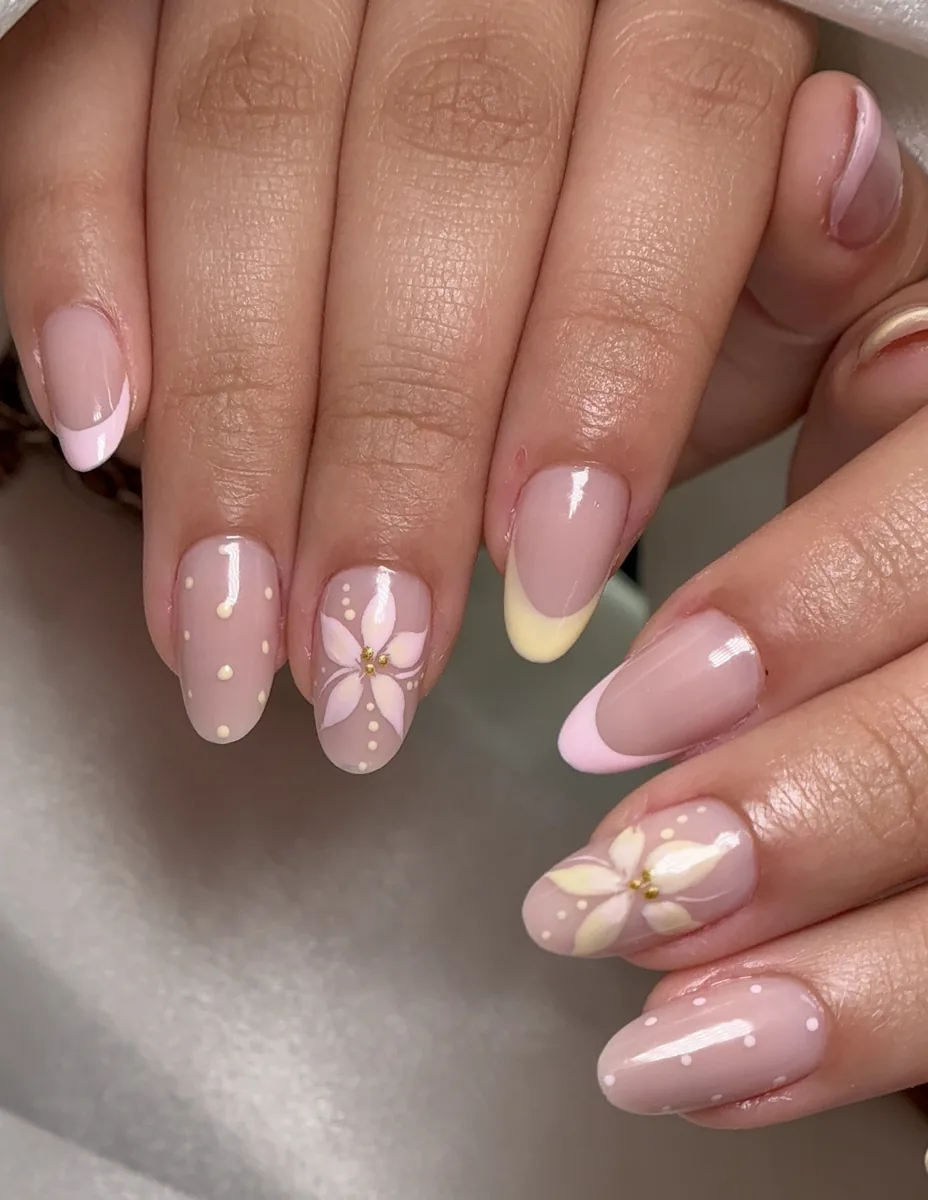
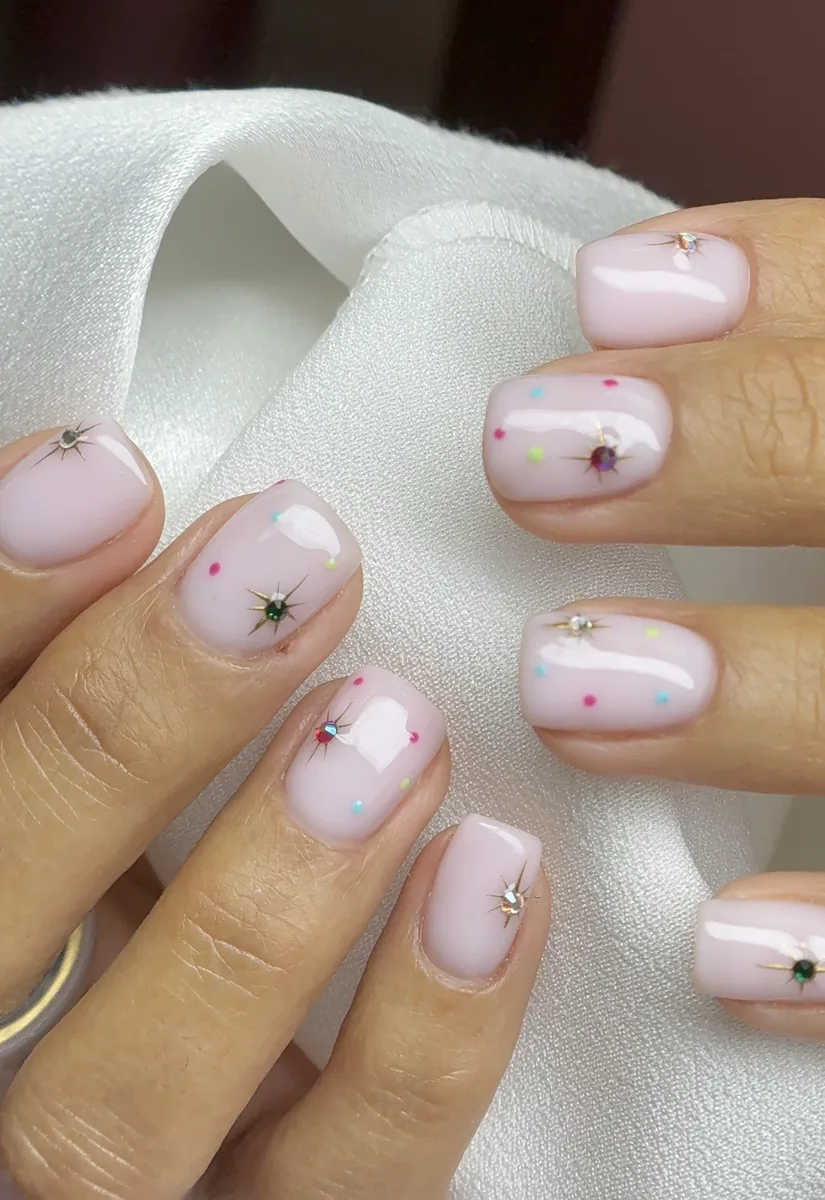
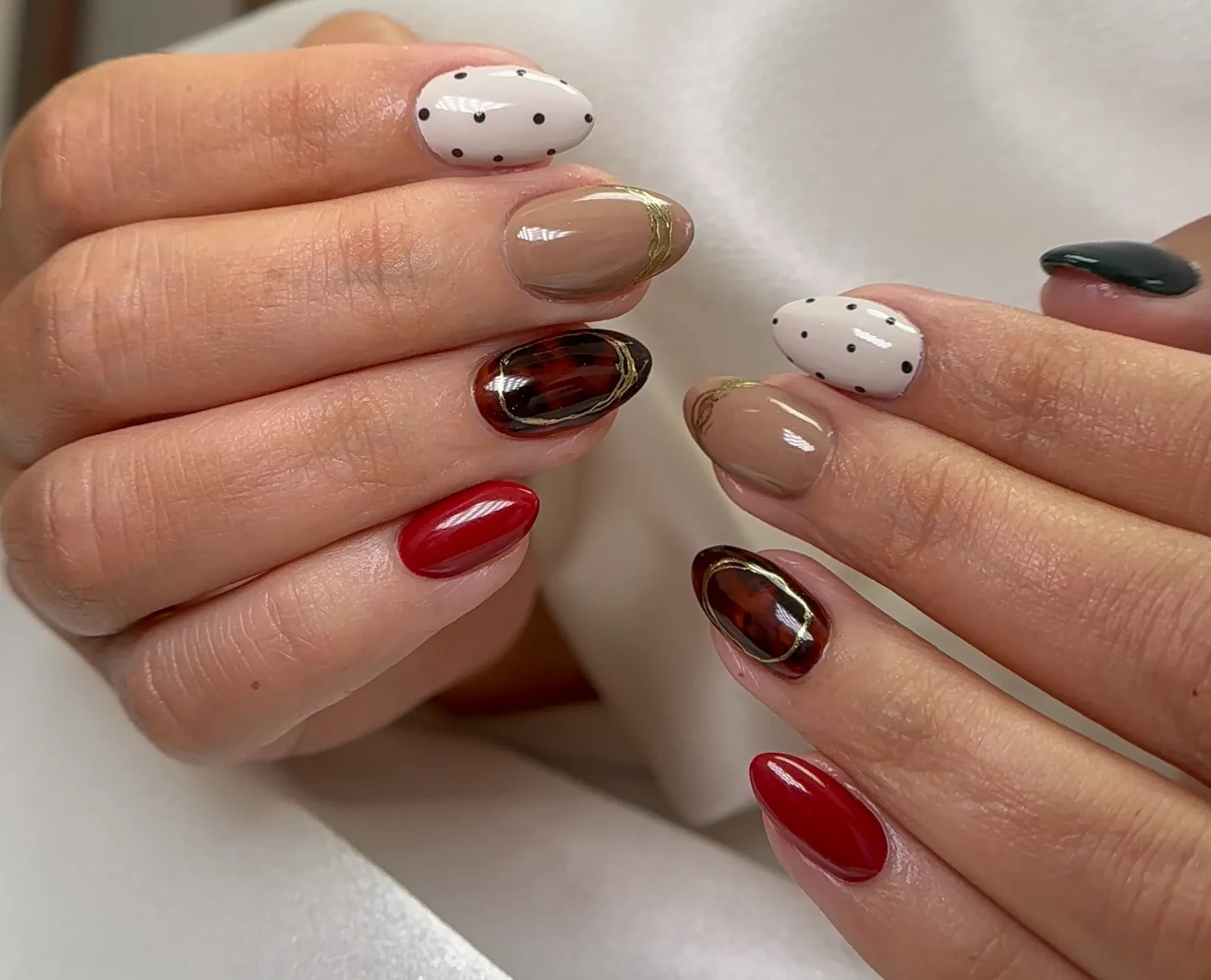
Every nail doesn't need a new idea. Solid color gives your eye somewhere to pause between plaid, stripes, and dots. It also makes the detailed nails easier to appreciate.
A quiet nail can still have shimmer. What matters is that it carries less pattern, not that it disappears. If you want to simplify a saved design, try removing the artwork from one or two nails before changing the whole palette.
Use French tips to organize the mix
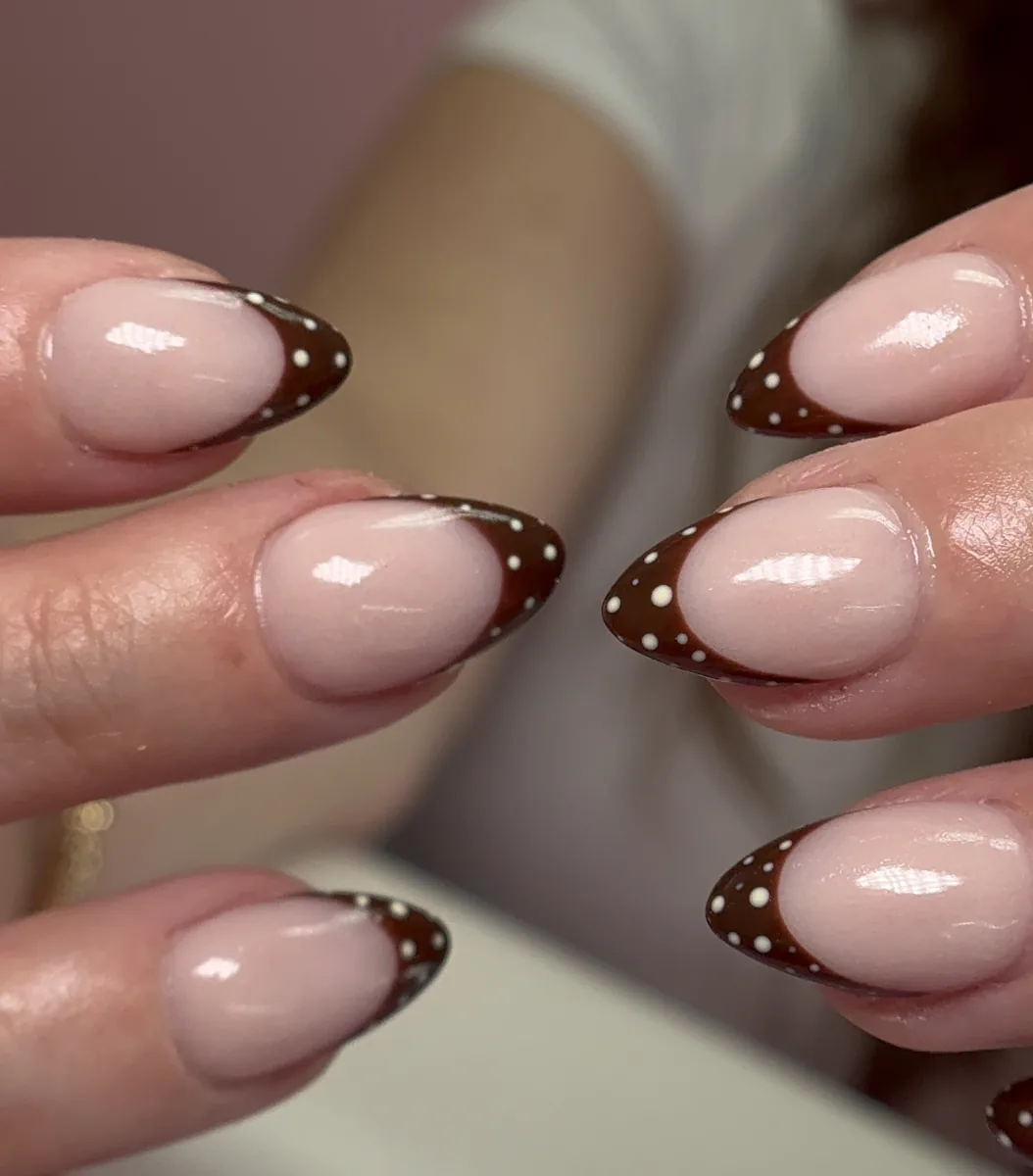
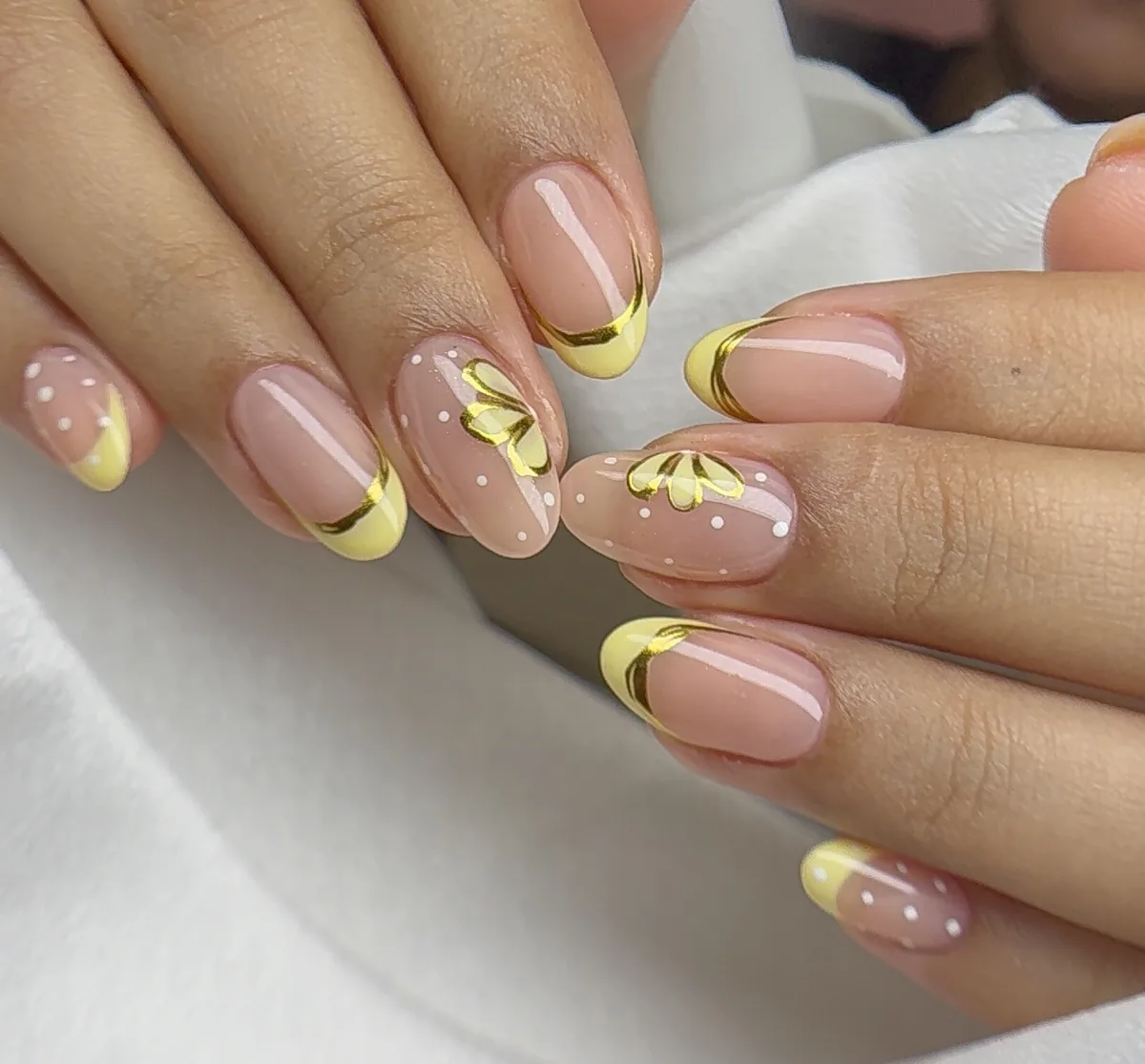
A French tip gives artwork a boundary. Dots can stay inside the tip, while a flower can sit beside it over an open base. Repeating that curved edge helps different details feel like they belong to the same set.
You don't have to use identical tips everywhere. Keep a similar curve or depth, then vary the decoration. My modern French manicure guide explains more ways to adjust the shape of the tip.
Connect bows, dots, and plaid with small details
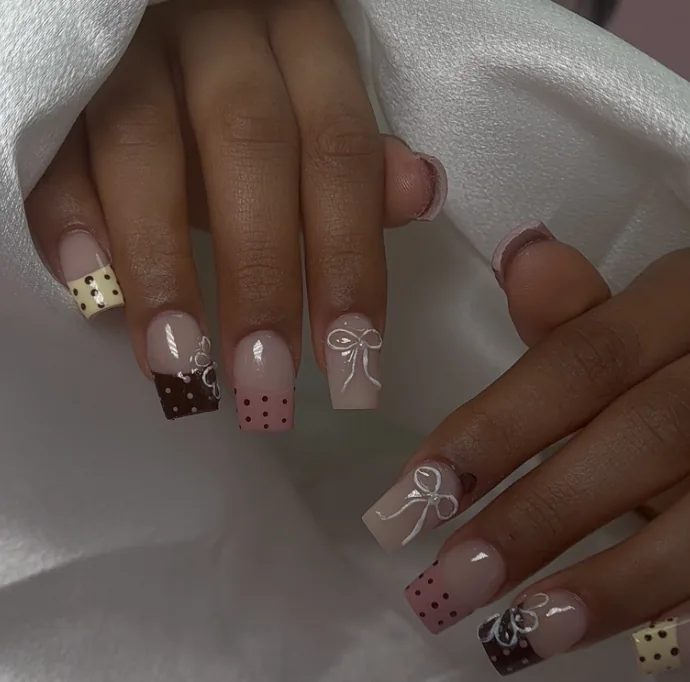
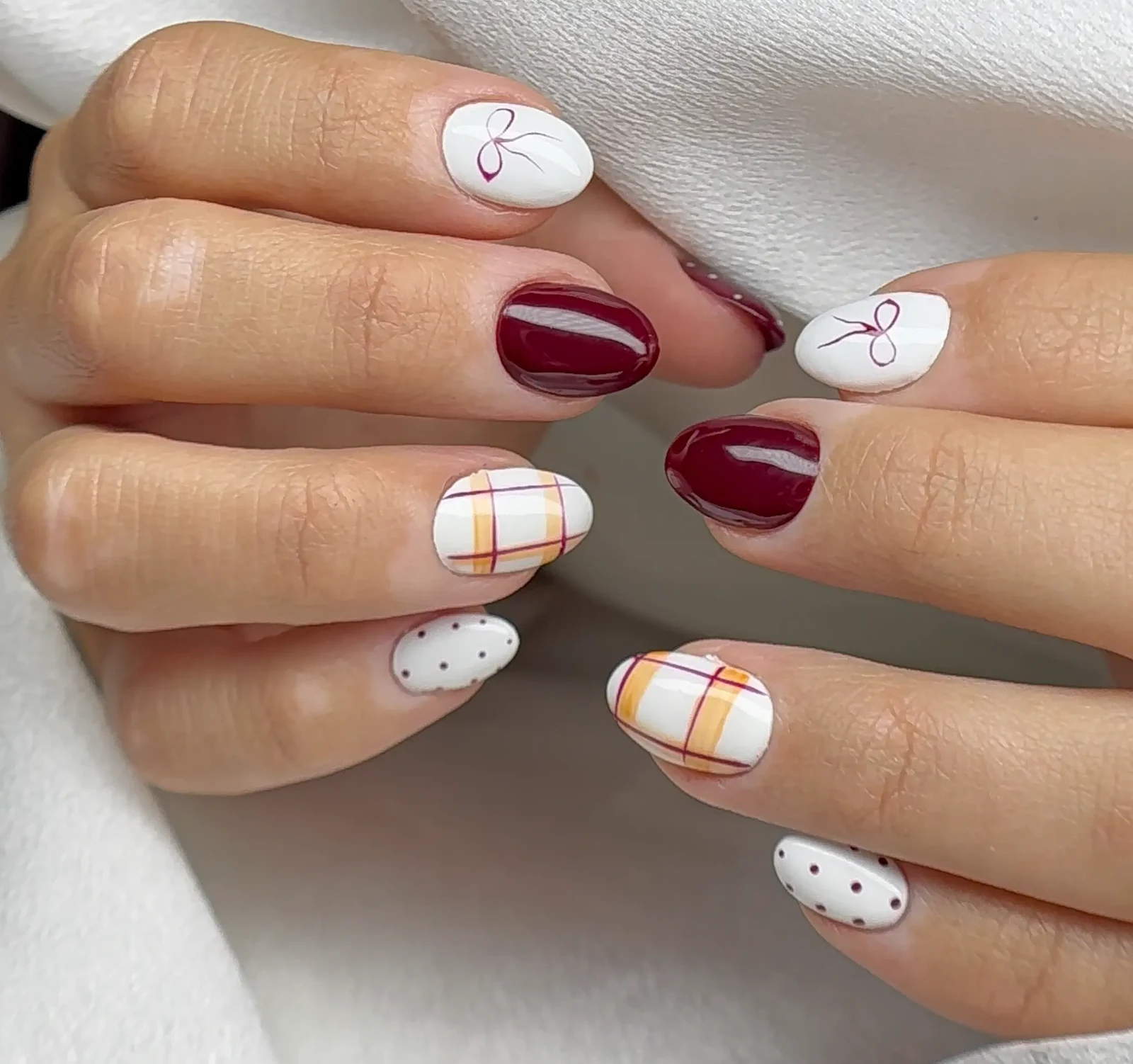
Bows and plaid both have lines, while dots add a rounder shape. They can sit together comfortably when the colors and line weight stay connected. I would keep a bow's outline delicate if the nearby plaid is fine, rather than making both equally heavy.
Choose one little detail to repeat, such as white dots or a brown outline. It can appear on several nails without repeating the entire design. Leave room around the bows so their loops remain easy to read.
Give bolder combinations a clear connection
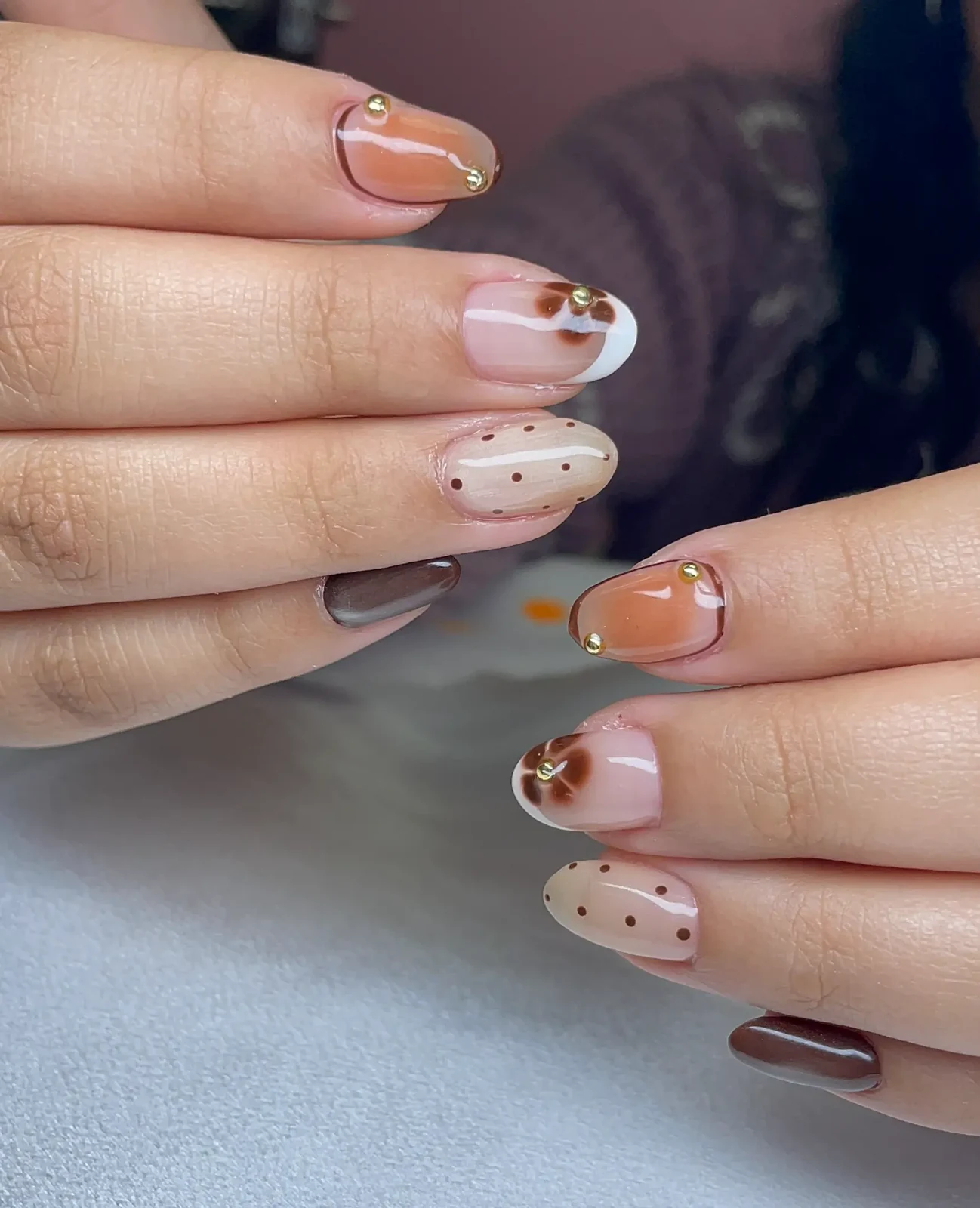
Cherries, florals, and mottled tortoiseshell have more going on than a simple dot. You can still combine them, but decide what connects them before adding another pattern. That might be the red of the fruit repeated in nearby details, or brown carried through outlines and flowers.
For animal-inspired patterns, I would let the irregular markings be the busy part and use a more predictable pattern beside them. Evenly spaced dots provide that contrast. More motifs aren't automatically too much; several unrelated palettes and equally dense patterns are harder to coordinate.
Bring the details you want to keep
Save a few references, then tell me what you like in each: the brown-and-blue pairing, a tiny white bow, or a flower's placement. Tell me what you would leave out, too. You don't need every finger planned.
We'll consider the space available for artwork. My guide to choosing nail length can help if you're undecided about length. We can adjust motif size or the number of patterned nails to suit. Read about builder gel and Gel-X nails before choosing your appointment.
If your saved ideas still feel like too much together, we'll choose the detail you most want to see and build around it. Bring your references when you book with me, and we'll work out what to repeat and where to leave space.
Several saved ideas, one set that feels like you
Bring your references to a private appointment. Kim can help you choose what to repeat, what to simplify, and where to leave space.